![[personal profile]](https://www.dreamwidth.org/img/silk/identity/user.png)


A while back I mentioned that I like to imagine that Illya met Lord Peter Wimsey while he was at Cambridge and that it was Lord Peter who introduced him to Waverly. ![[livejournal.com profile]](https://www.dreamwidth.org/img/external/lj-userinfo.gif) laughingacademy came up with the brilliant idea that Illya might have had his portrait taken by Bunter during the course of these events. This is their encounter, immediately after the successful resolution of the Incident of the Fellow in the Fellows' Garden.
laughingacademy came up with the brilliant idea that Illya might have had his portrait taken by Bunter during the course of these events. This is their encounter, immediately after the successful resolution of the Incident of the Fellow in the Fellows' Garden.
Oh, and at Cambridge a "bedder" is nowadays a cleaning lady, but in the 1950s a bedder would have been male and would not only have cleaned the room, but laid the fire and made the bed and performed errands for the student he was assigned to.
Camera obscura
“Excuse me, Mr Kuryakin? His Lordship has instructed me to say that he would be most obliged if you would consent to my taking your portrait; he likes to keep a record of the cases he has worked on. That's most kind of you. Would you be so good as to step this way, sir? The Bursar has very considerately placed a cellar room at my disposal, but do watch the steps as you go down, the third from the bottom is a little uneven...”
The speaker was Wimsey's – um, Wimsey's what? “Servant” was the correct word, Illya supposed, though it went against the grain to think of a living breathing human being in those terms. “Assistant” didn't quite catch the obsequious attitude the man assumed, and “friend” conspired in disguising the stark economic reality of their relationship. At any rate, he was Wimsey's man, and Illya suspected he would be putting him in a difficult situation if he refused, much as he disliked having his photograph taken.
The cellar at the bottom of B Staircase turned out to be a dingy little room with whitewashed brick walls, one end of which was set up as a miniature studio, with a large white screen and several impressive lamps, the other end containing a bench with the equipment needed for developing film. Evidently wealth and influence could penetrate even below the ground of this venerable institution, for space was at a premium in the little College, and the Bursar would certainly have had to move something out of there to make way for Wimsey's toys.
“If you would take a seat, sir? It will take me a few minutes to adjust the lighting. It's all a matter of light and shade, you see. The art of the portrait photograph lies not in directing light on what anyone can see, but in bringing hidden truths into plain view. I deduce from your discomfort that this is the first time you've had your portrait taken, sir?”
“Please don't call me 'sir',” Illya said.
For an almost imperceptible moment, the servant hesitated, then his brows drew together in a sort of twitch, over as soon as it had begun. “Certainly,” he said coldly. “How would you prefer to be addressed, Comrade Kuryakin?”
“Mr Kuryakin will do, Mr Bunter.”
“As you wish, Mr Kuryakin.”
The man managed to make it sound as if he were accepting an order, an order which, moreover, he found personally distasteful, and thereby to place Illya in the ranks of the oppressors. It irritated Illya, and, as always when he felt wrong-footed, he became ungracious.
“How long have you been Wimsey's servant?” he asked, the question coming out a touch more aggressively than he had intended.
“I have been in his Lordship's personal employ since 1919,” said Bunter, carefully setting the camera on a tripod and then lowering it. “Before that I was his batman during the Great War.”
“Batman?” said Illya.
“A form of military manservant, who performs duties akin to those of a bedder,” said Bunter, switching off all the lights but one, and turning that one on Illya, as if this was an interrogation. “I presume you are familiar with those, Mr Kuryakin? Or have your political principles rendered yours unemployed?” The question was phrased in the politest terms, but even a foreigner could not miss the underlying sarcasm.
“I make my own bed,” said Illya stiffly.
“Very admirable, I'm sure,” said Bunter. “As I mentioned, I was his Lordship's batman and his regimental sergeant. I dug him out when a trench collapsed on him, which I can assure you was a far more difficult service than making his bed. Might I ask you to stand and turn a few inches to the left?”
Illya groped for the meaning behind Bunter's words. He was certain the man was trying to wrong-foot him again, but he was missing a link somewhere. Was Bunter suggesting that, as a Soviet, he, Illya, thought he should not have saved his commanding officer from the agony of suffocating in mud? Anger flared in him and he said “I know all about trenches, if that's what you're getting at. I spent three months digging them during the Battle of Moscow.”
Again a minimal alteration in Bunter's features suggested an emotional response, but once again it was gone before Illya could read it properly. Bunter's expression was one of impeccable politeness as he said “Not that I am in any sense doubting your word, Mr Kuryakin, but surely you were rather young for such arduous labour?”
Illya glared. He generally avoided thinking of the war, because there was nothing about it that was pleasant to remember and a great deal that he should much prefer to forget, but this mocking doubt, from a lackey of the aristocracy, touched a vein of Russian pride in him; his country's honour was at stake. “I was nine,” he said, lowering his eyes slightly to meet Bunter's probing gaze head on. The camera clicked, and he started, having completely forgotten that this was the object of their meeting.
“I'm sorry,” said Bunter gently. “It was not my intent to malign the courage or suffering of the Soviet people. If I am honest with you, Mr Kuryakin, as you deserve, my intention was to provoke you, in the interests of obtaining a truthful portrait. Since I now have that, I suggest that we discontinue this conversation. I do not believe I will have to take another shot. ”
The light snapped off, and total darkness filled the cellar. For a moment Illya remained standing by his chair, furious at Bunter's confession. Once again he had been wrong-footed – how could he have fallen for such a cheap confidence trick? - but he had no intention of being beaten so easily. As the red light began to glow over the developing bench, he fired a return salvo.
“Since we are being honest with each, Mr Bunter,” he said, “Can you tell me what brings a man to dedicate his whole life to the welfare of another person? Don't you have any pride?”
To his astonishment, Bunter positively smirked; it could not have been more unexpected if the man had winked at him. “I assume from this question,” he said, “that you have as yet no experience of Love, Mr Kuryakin?”
Illya was completely taken aback. He knew what love was, of course – the catch in the throat, the flutter in the gut – but this was something quite different. Was it possible to love someone so much that you would give up everything to devote yourself to their service? A scandalous suspicion presented itself for his attention - he had heard, of course, of the love that dare not speak its name, that supposedly could exist between two men... but no, Wimsey was married, and had children, had, indeed, a veritable superfluity of heirs. Bunter must be speaking of platonic affection, which was admirable, and perhaps not dissimilar to the devotion he himself was required to bring to the Soviet state. Still, it was capitalist decadence to suggest that a single individual could be worthy of that kind of selfless love, although Bunter, as an oppressed member of the proletariat, could hardly be blamed for falling for this ideological trick.
The oppressed member of the proletariat was at that moment waving him over to the bench, apparently in order to demonstrate the process of photographic development. Feeling somewhat discomfited, Illya nevertheless joined him at the water tray. His discomfort gave way to scientific interest as he watched Bunter's capable fingers rock the blank sheet of photographic paper gently back and forth, back and forth; and then the miracle happened.
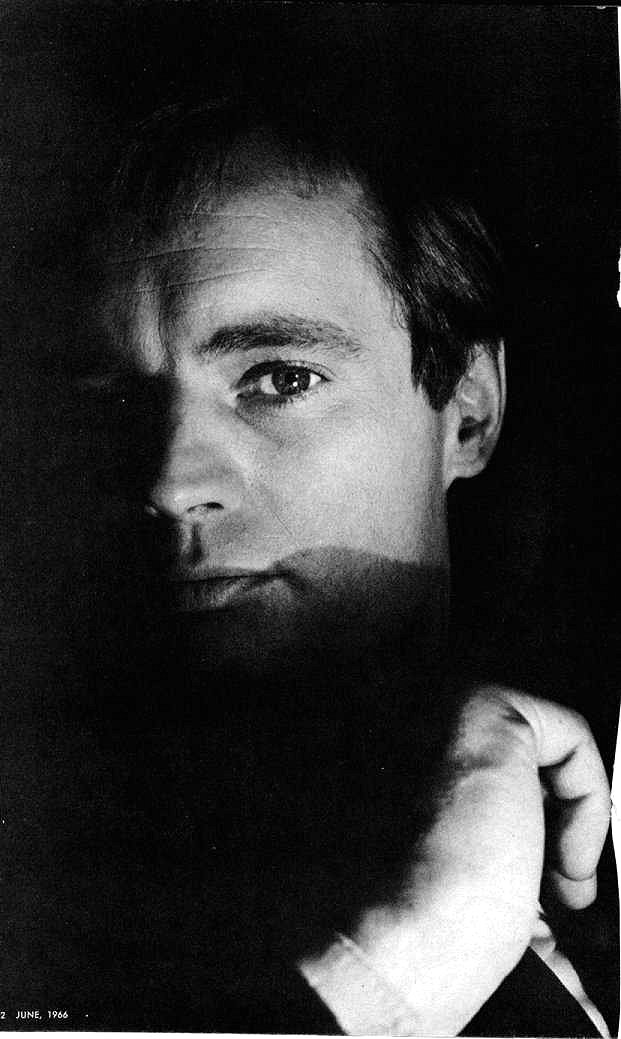
Beneath the ripples in the water, dark shadows began to blossom against the white paper, like bruises forming under skin. There seemed to be no principle determining where the shadows would gather, for the paper darkened irregularly, the patches spreading out and joining up until it seemed as if the whole photograph would be nothing but blackness. Soon only two blotches of white remained, one near the centre and one down in the corner. Their purity sullied into pale grey and black spots began to fester within the pallor, but then the process halted, and as the shadows around them continued to deepen, the blotches seemed to grow paler in contrast. Illya watched, fascinated, as the boundaries between light and dark sharpened and acquired definition until suddenly, like a kaleidoscope, the pieces fell into place and he realised he was looking at the image of a face. His face, apparently, although it didn't look anything like him. Or at least it looked like him, but how he would look if he were someone else. His hair, which he had expected to be pale on the photograph, was one of the blackest parts of the picture, an extension of the darkness that surrounded him; and the darkness had entered his eyes, too, giving them inky depths in which secrets swam as numerous as fish. The patch of white at the bottom was his hand, raised as if to ward off an approach - whether in the form of a blow, or of unwanted intimacy, it was impossible to tell. It cast a shadow over what little was visible of his face, and indeed perhaps it was the light itself he was seeking to ward off, the light that had plucked him, a man of shadows, from the obscurity of the shadows, and exposed him to the gaze he was holding, half defiant, half provocative.
“I don't look like that,” he said wonderingly.
For the first and only time that afternoon, Bunter smiled. “I assure you, you do, Mr Kuryakin,” he said.
“I look like a spy,” said Illya. “But I'm not a spy! I'm a scientist.”
“If I might venture an observation,” said Bunter, turning the lights back on, “I have been a gentleman's gentleman for over thirty years and in that time I have learned that, of all things, it is labels - and titles – that tell us least about a man. One would not think, would one, that an English aristocrat and a Russian Communist could have much in common? But I can assure you that I have never met a man who reminds me more of his Lordship in his younger days. If you will forgive the impertinence, Mr Kuryakin, the British class system is hardly an opponent worthy of your talents, but I am certain that one day you will find one that is. And now if you will excuse me, sir, I must tidy up here. Please take care on your way out, the third step from the bottom is a little uneven...”
As Illya disappeared around the bend in the staircase, he thought he heard Bunter murmuring to himself while he cleared away the chemicals. “A tough nut indeed... Where did I put the fixer?... Couldn't be more like Peter if they were two peas in a pod... Never want to let you see beneath the mask... Tsk, this bulb will need replacing... Dear me, who'd have thought that that was what the Bolsheviks were breeding?”
For the curious, Bunter's portrait of Illya can be found here.
laughingacademy came up with the brilliant idea that Illya might have had his portrait taken by Bunter during the course of these events. This is their encounter, immediately after the successful resolution of the Incident of the Fellow in the Fellows' Garden. Oh, and at Cambridge a "bedder" is nowadays a cleaning lady, but in the 1950s a bedder would have been male and would not only have cleaned the room, but laid the fire and made the bed and performed errands for the student he was assigned to.
Camera obscura
“Excuse me, Mr Kuryakin? His Lordship has instructed me to say that he would be most obliged if you would consent to my taking your portrait; he likes to keep a record of the cases he has worked on. That's most kind of you. Would you be so good as to step this way, sir? The Bursar has very considerately placed a cellar room at my disposal, but do watch the steps as you go down, the third from the bottom is a little uneven...”
The speaker was Wimsey's – um, Wimsey's what? “Servant” was the correct word, Illya supposed, though it went against the grain to think of a living breathing human being in those terms. “Assistant” didn't quite catch the obsequious attitude the man assumed, and “friend” conspired in disguising the stark economic reality of their relationship. At any rate, he was Wimsey's man, and Illya suspected he would be putting him in a difficult situation if he refused, much as he disliked having his photograph taken.
The cellar at the bottom of B Staircase turned out to be a dingy little room with whitewashed brick walls, one end of which was set up as a miniature studio, with a large white screen and several impressive lamps, the other end containing a bench with the equipment needed for developing film. Evidently wealth and influence could penetrate even below the ground of this venerable institution, for space was at a premium in the little College, and the Bursar would certainly have had to move something out of there to make way for Wimsey's toys.
“If you would take a seat, sir? It will take me a few minutes to adjust the lighting. It's all a matter of light and shade, you see. The art of the portrait photograph lies not in directing light on what anyone can see, but in bringing hidden truths into plain view. I deduce from your discomfort that this is the first time you've had your portrait taken, sir?”
“Please don't call me 'sir',” Illya said.
For an almost imperceptible moment, the servant hesitated, then his brows drew together in a sort of twitch, over as soon as it had begun. “Certainly,” he said coldly. “How would you prefer to be addressed, Comrade Kuryakin?”
“Mr Kuryakin will do, Mr Bunter.”
“As you wish, Mr Kuryakin.”
The man managed to make it sound as if he were accepting an order, an order which, moreover, he found personally distasteful, and thereby to place Illya in the ranks of the oppressors. It irritated Illya, and, as always when he felt wrong-footed, he became ungracious.
“How long have you been Wimsey's servant?” he asked, the question coming out a touch more aggressively than he had intended.
“I have been in his Lordship's personal employ since 1919,” said Bunter, carefully setting the camera on a tripod and then lowering it. “Before that I was his batman during the Great War.”
“Batman?” said Illya.
“A form of military manservant, who performs duties akin to those of a bedder,” said Bunter, switching off all the lights but one, and turning that one on Illya, as if this was an interrogation. “I presume you are familiar with those, Mr Kuryakin? Or have your political principles rendered yours unemployed?” The question was phrased in the politest terms, but even a foreigner could not miss the underlying sarcasm.
“I make my own bed,” said Illya stiffly.
“Very admirable, I'm sure,” said Bunter. “As I mentioned, I was his Lordship's batman and his regimental sergeant. I dug him out when a trench collapsed on him, which I can assure you was a far more difficult service than making his bed. Might I ask you to stand and turn a few inches to the left?”
Illya groped for the meaning behind Bunter's words. He was certain the man was trying to wrong-foot him again, but he was missing a link somewhere. Was Bunter suggesting that, as a Soviet, he, Illya, thought he should not have saved his commanding officer from the agony of suffocating in mud? Anger flared in him and he said “I know all about trenches, if that's what you're getting at. I spent three months digging them during the Battle of Moscow.”
Again a minimal alteration in Bunter's features suggested an emotional response, but once again it was gone before Illya could read it properly. Bunter's expression was one of impeccable politeness as he said “Not that I am in any sense doubting your word, Mr Kuryakin, but surely you were rather young for such arduous labour?”
Illya glared. He generally avoided thinking of the war, because there was nothing about it that was pleasant to remember and a great deal that he should much prefer to forget, but this mocking doubt, from a lackey of the aristocracy, touched a vein of Russian pride in him; his country's honour was at stake. “I was nine,” he said, lowering his eyes slightly to meet Bunter's probing gaze head on. The camera clicked, and he started, having completely forgotten that this was the object of their meeting.
“I'm sorry,” said Bunter gently. “It was not my intent to malign the courage or suffering of the Soviet people. If I am honest with you, Mr Kuryakin, as you deserve, my intention was to provoke you, in the interests of obtaining a truthful portrait. Since I now have that, I suggest that we discontinue this conversation. I do not believe I will have to take another shot. ”
The light snapped off, and total darkness filled the cellar. For a moment Illya remained standing by his chair, furious at Bunter's confession. Once again he had been wrong-footed – how could he have fallen for such a cheap confidence trick? - but he had no intention of being beaten so easily. As the red light began to glow over the developing bench, he fired a return salvo.
“Since we are being honest with each, Mr Bunter,” he said, “Can you tell me what brings a man to dedicate his whole life to the welfare of another person? Don't you have any pride?”
To his astonishment, Bunter positively smirked; it could not have been more unexpected if the man had winked at him. “I assume from this question,” he said, “that you have as yet no experience of Love, Mr Kuryakin?”
Illya was completely taken aback. He knew what love was, of course – the catch in the throat, the flutter in the gut – but this was something quite different. Was it possible to love someone so much that you would give up everything to devote yourself to their service? A scandalous suspicion presented itself for his attention - he had heard, of course, of the love that dare not speak its name, that supposedly could exist between two men... but no, Wimsey was married, and had children, had, indeed, a veritable superfluity of heirs. Bunter must be speaking of platonic affection, which was admirable, and perhaps not dissimilar to the devotion he himself was required to bring to the Soviet state. Still, it was capitalist decadence to suggest that a single individual could be worthy of that kind of selfless love, although Bunter, as an oppressed member of the proletariat, could hardly be blamed for falling for this ideological trick.
The oppressed member of the proletariat was at that moment waving him over to the bench, apparently in order to demonstrate the process of photographic development. Feeling somewhat discomfited, Illya nevertheless joined him at the water tray. His discomfort gave way to scientific interest as he watched Bunter's capable fingers rock the blank sheet of photographic paper gently back and forth, back and forth; and then the miracle happened.
Beneath the ripples in the water, dark shadows began to blossom against the white paper, like bruises forming under skin. There seemed to be no principle determining where the shadows would gather, for the paper darkened irregularly, the patches spreading out and joining up until it seemed as if the whole photograph would be nothing but blackness. Soon only two blotches of white remained, one near the centre and one down in the corner. Their purity sullied into pale grey and black spots began to fester within the pallor, but then the process halted, and as the shadows around them continued to deepen, the blotches seemed to grow paler in contrast. Illya watched, fascinated, as the boundaries between light and dark sharpened and acquired definition until suddenly, like a kaleidoscope, the pieces fell into place and he realised he was looking at the image of a face. His face, apparently, although it didn't look anything like him. Or at least it looked like him, but how he would look if he were someone else. His hair, which he had expected to be pale on the photograph, was one of the blackest parts of the picture, an extension of the darkness that surrounded him; and the darkness had entered his eyes, too, giving them inky depths in which secrets swam as numerous as fish. The patch of white at the bottom was his hand, raised as if to ward off an approach - whether in the form of a blow, or of unwanted intimacy, it was impossible to tell. It cast a shadow over what little was visible of his face, and indeed perhaps it was the light itself he was seeking to ward off, the light that had plucked him, a man of shadows, from the obscurity of the shadows, and exposed him to the gaze he was holding, half defiant, half provocative.
“I don't look like that,” he said wonderingly.
For the first and only time that afternoon, Bunter smiled. “I assure you, you do, Mr Kuryakin,” he said.
“I look like a spy,” said Illya. “But I'm not a spy! I'm a scientist.”
“If I might venture an observation,” said Bunter, turning the lights back on, “I have been a gentleman's gentleman for over thirty years and in that time I have learned that, of all things, it is labels - and titles – that tell us least about a man. One would not think, would one, that an English aristocrat and a Russian Communist could have much in common? But I can assure you that I have never met a man who reminds me more of his Lordship in his younger days. If you will forgive the impertinence, Mr Kuryakin, the British class system is hardly an opponent worthy of your talents, but I am certain that one day you will find one that is. And now if you will excuse me, sir, I must tidy up here. Please take care on your way out, the third step from the bottom is a little uneven...”
As Illya disappeared around the bend in the staircase, he thought he heard Bunter murmuring to himself while he cleared away the chemicals. “A tough nut indeed... Where did I put the fixer?... Couldn't be more like Peter if they were two peas in a pod... Never want to let you see beneath the mask... Tsk, this bulb will need replacing... Dear me, who'd have thought that that was what the Bolsheviks were breeding?”
For the curious, Bunter's portrait of Illya can be found here.